
Navigation & IA Exploration
During my time working with Verizon, I was part of the UX navigation team supporting My Verizon Online (MVO) and My Verizon App (MVA). This project focused on integrating new Verizon Home app entry points into both authenticated and unauthenticated experiences, across web and mobile.
The work took place across multiple phases and was still evolving when I left the company. What follows reflects the analysis, structure, and navigation strategy developed during phases one through three.
This case is intentionally presented as process-driven, not outcome-driven.
🧭 Integrating Verizon Home into My Verizon Web and App
The initial ask was straightforward: introduce new Verizon Home app entry points into existing My Verizon navigation surfaces.
However, once we began evaluating the system holistically, it became clear that My Verizon had grown into a multi-product ecosystem serving mobile, home internet, devices, and services, often through shared navigation structures that weren’t originally designed for that breadth.
During an audit of both authenticated and unauthenticated user states, we identified inconsistencies where non-mobile subscribers were being exposed to mobile-centric content. This created confusion, weakened relevance, and surfaced deeper questions about how navigation should scale across products without increasing depth or complexity.
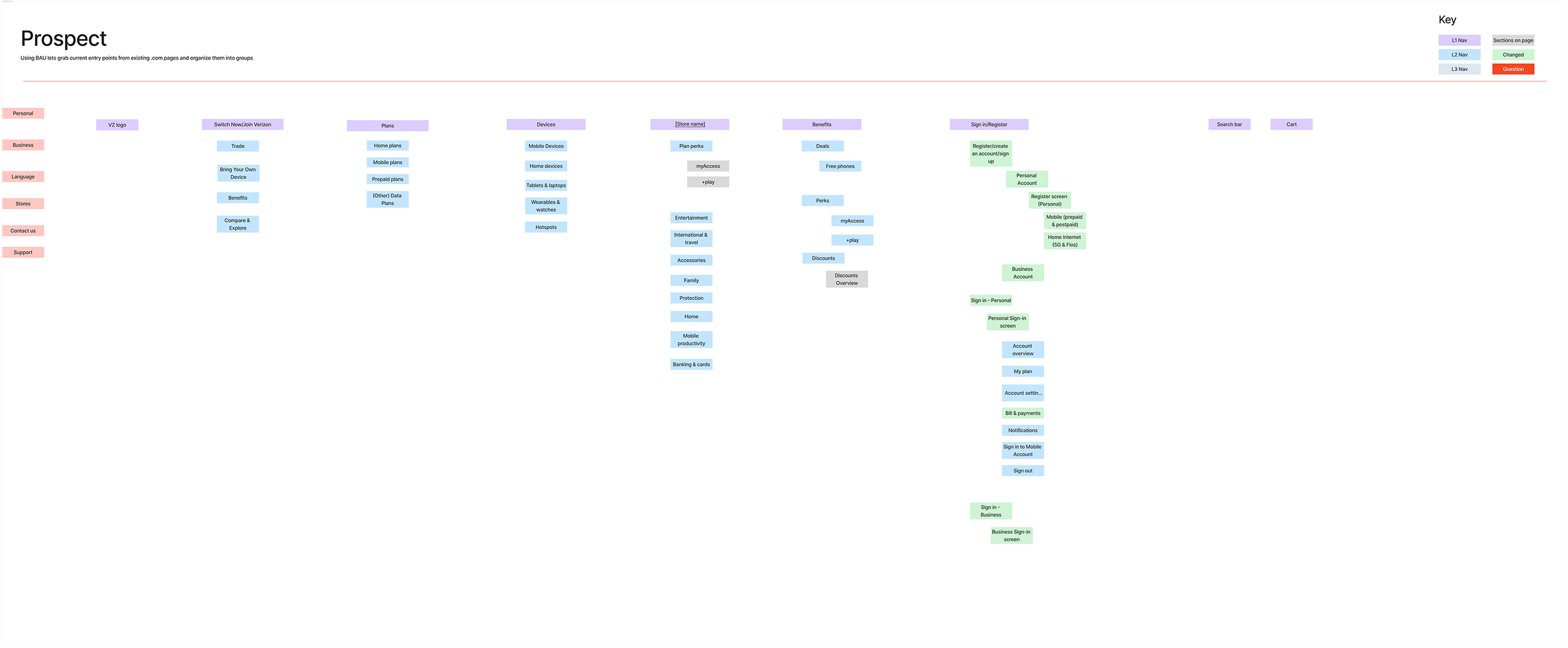
The Information Architecture team provided an initial prospect-level navigation recommendation, outlining how Verizon Home concepts could be grouped within existing My Verizon constraints. This artifact served as a starting point for validation, critique, and translation into platform-specific navigation explorations.
Approach
This work was conducted in close collaboration with the Information Architecture team, who initially provided feature-level IA from the Verizon Home app. That material served as a starting point.
Together, we audited:
prospect vs authenticated navigation paths
product eligibility across user types
depth, duplication, and cross-product leakage
Rather than expanding navigation endlessly, the goal was to explore options that respected a maximum depth of L2, even as new product domains were introduced. IA maps became the primary tool for reasoning through these constraints, allowing us to test structural hypotheses before committing to UI changes.
The emphasis was on reducing cognitive load, preserving relevance, and preventing accidental exposure to inapplicable services.
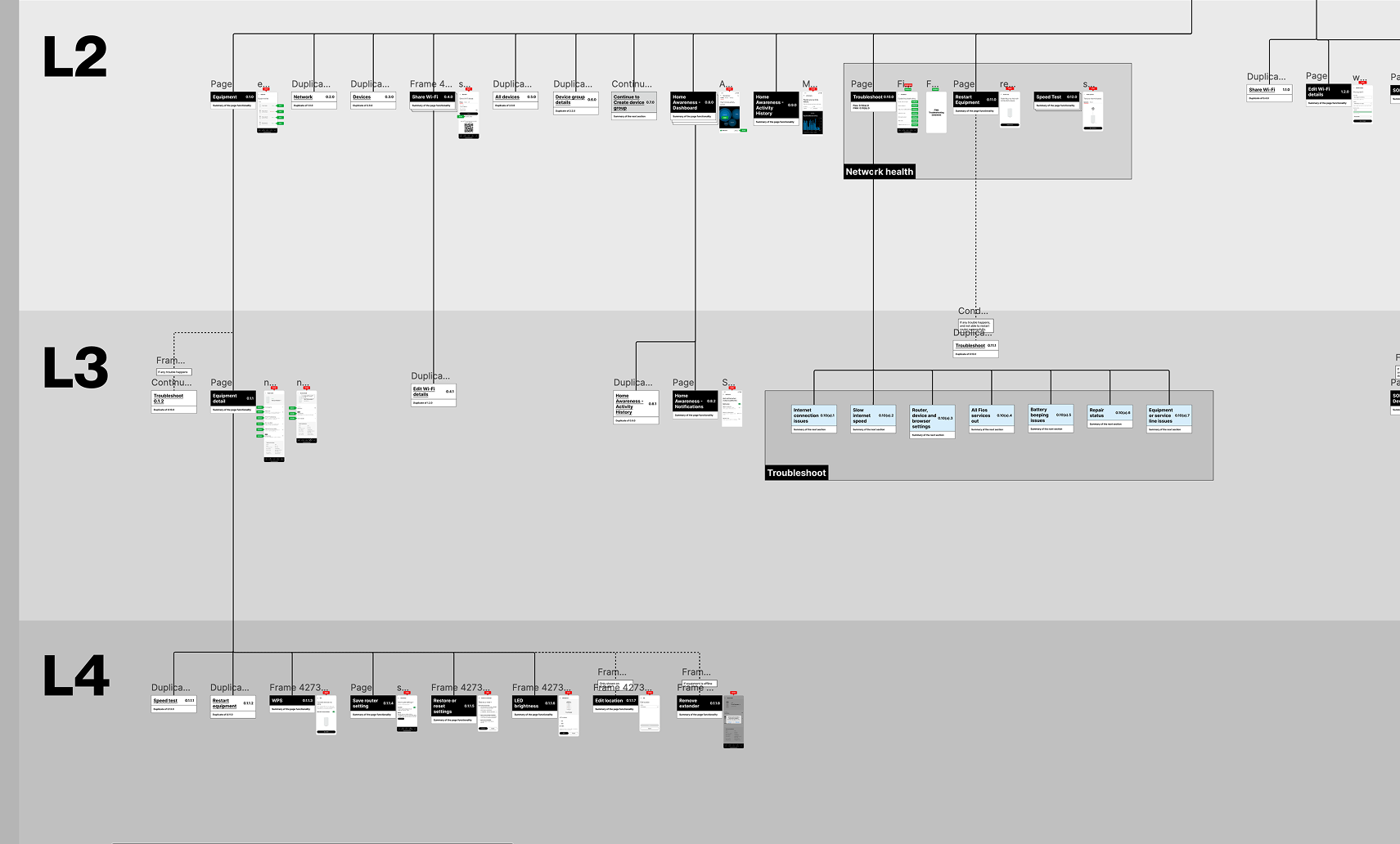
Translating Verizon Home app information architecture into My Verizon Online navigation options under L2 constraints.
Contribution
My role focused on translating IA insights into navigation explorations that could realistically live inside My Verizon’s existing ecosystem.
This included:
synthesizing IA maps into navigable structures for MVO and MVA
identifying mismatches between product eligibility and navigation visibility
proposing alternative groupings and entry points that reduced redundancy
pressure-testing prospect vs authenticated flows under the same framework
Different than designing screens, the work centered on navigation logic, hierarchy, and consistency across platforms..
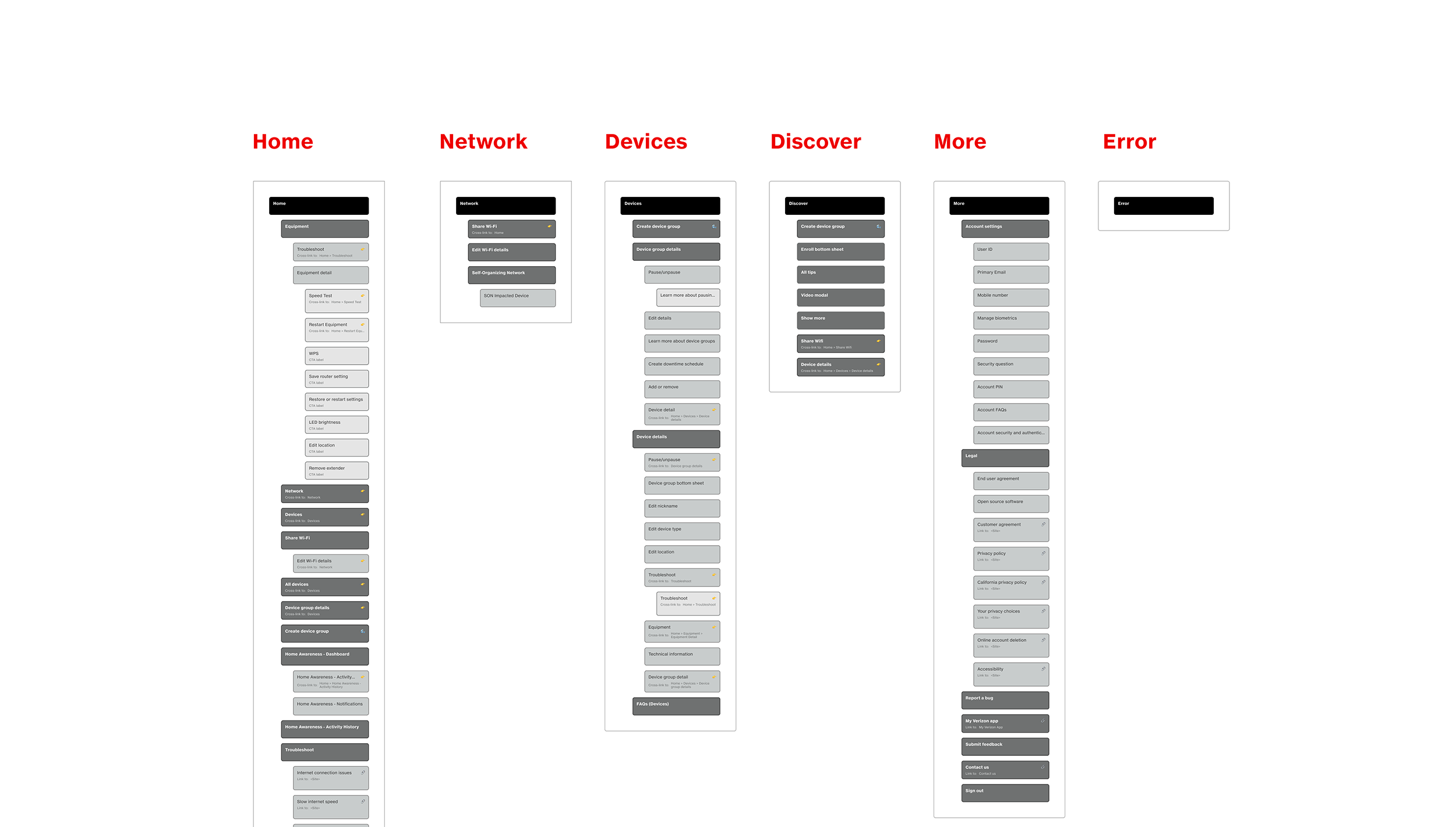
synthesizing IA maps into navigable structures, we explored how the same structural principles could adapt to My Verizon App without increasing cognitive load.
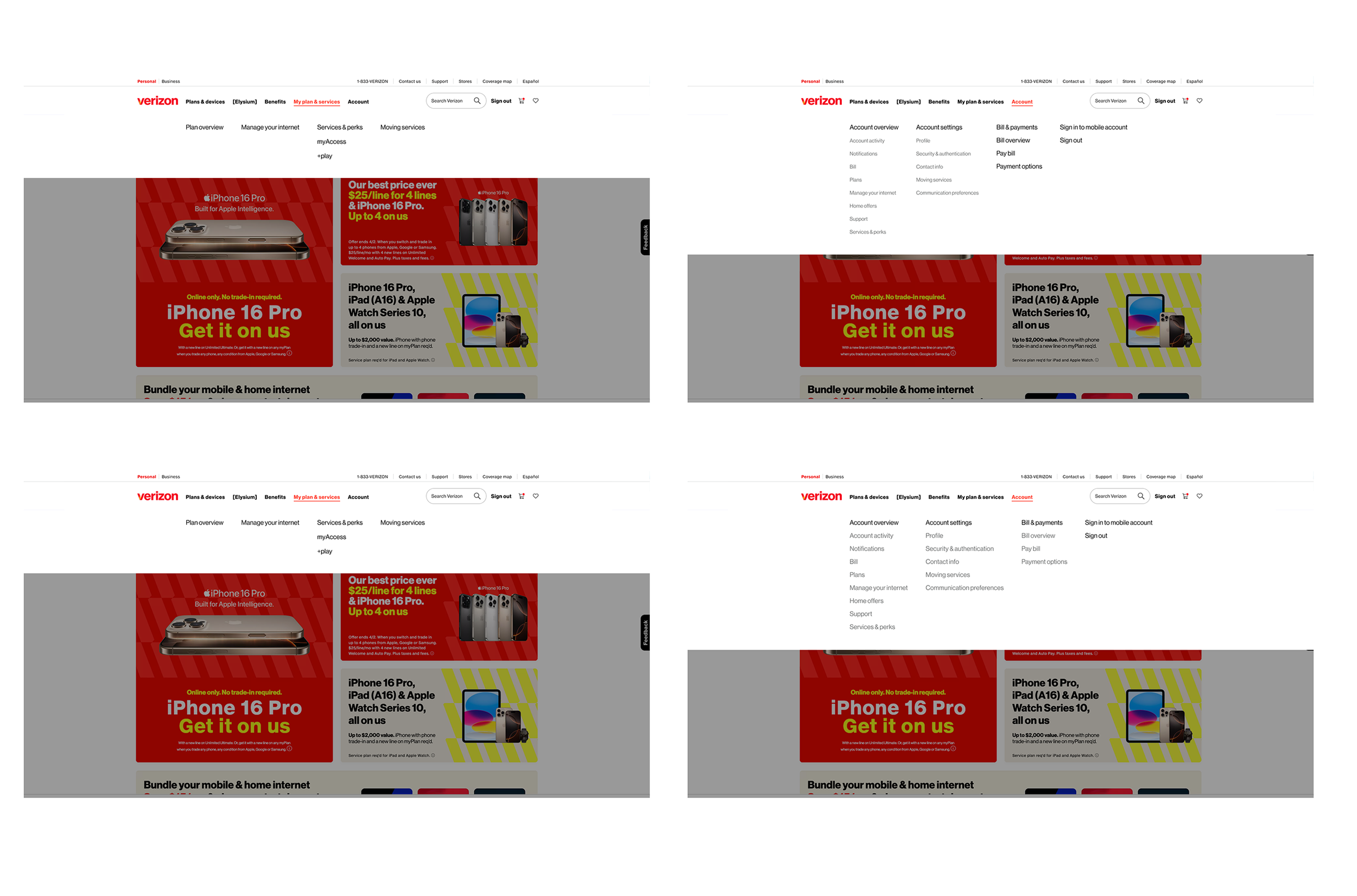
Menu explorations testing different grouping strategies while preserving L2 depth.
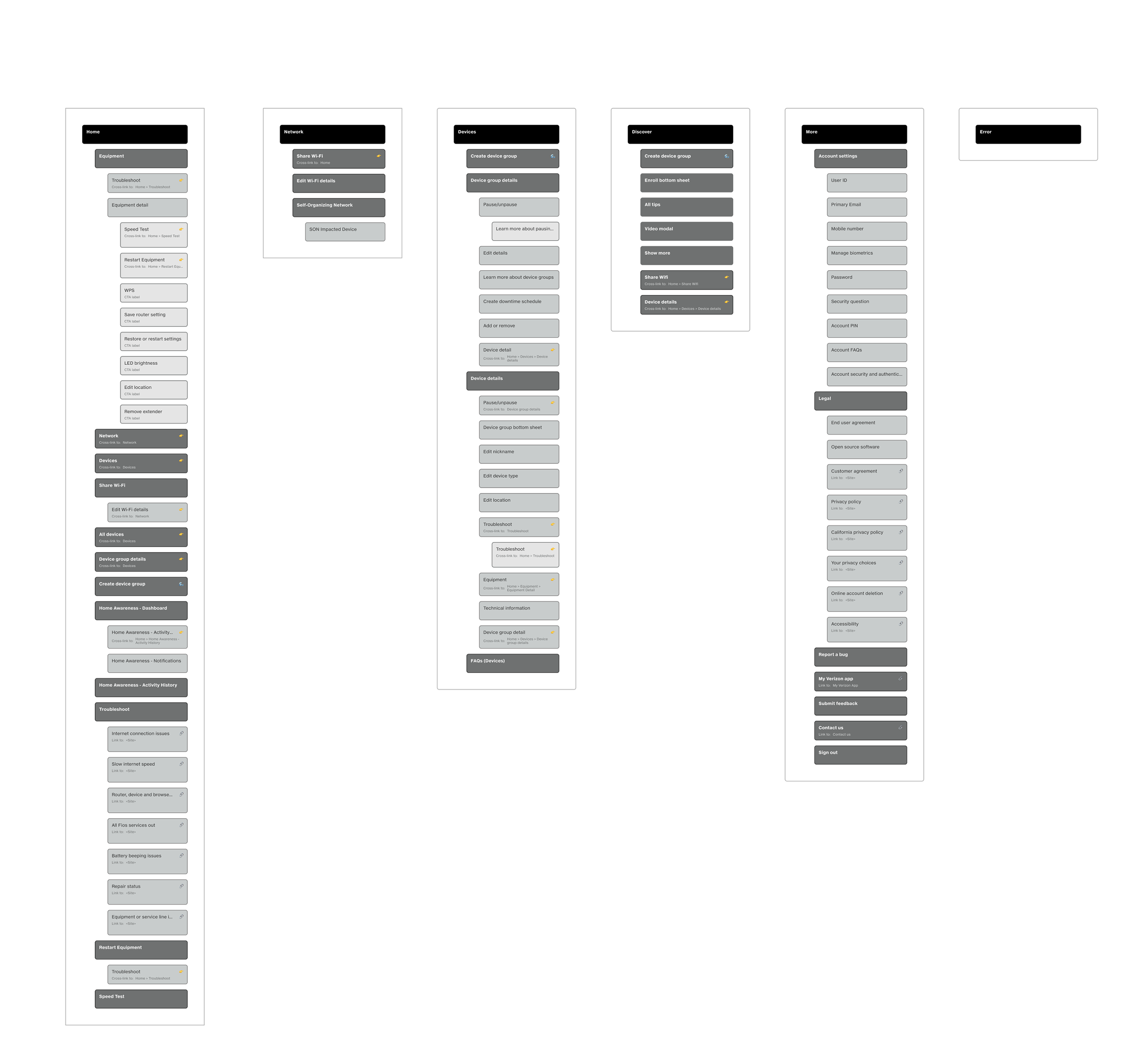
Exploratory navigation map representing work in progress across multiple phases.
Status & Outcome
This project progressed through multiple exploratory phases and informed ongoing navigation discussions across teams. While I did not remain through final implementation, the work helped establish a clearer understanding of how Verizon Home could coexist within My Verizon without fragmenting the experience.
The value of this project lies in system-level thinking: recognizing that navigation is not additive, and that scaling a product ecosystem requires restraint as much as expansion.